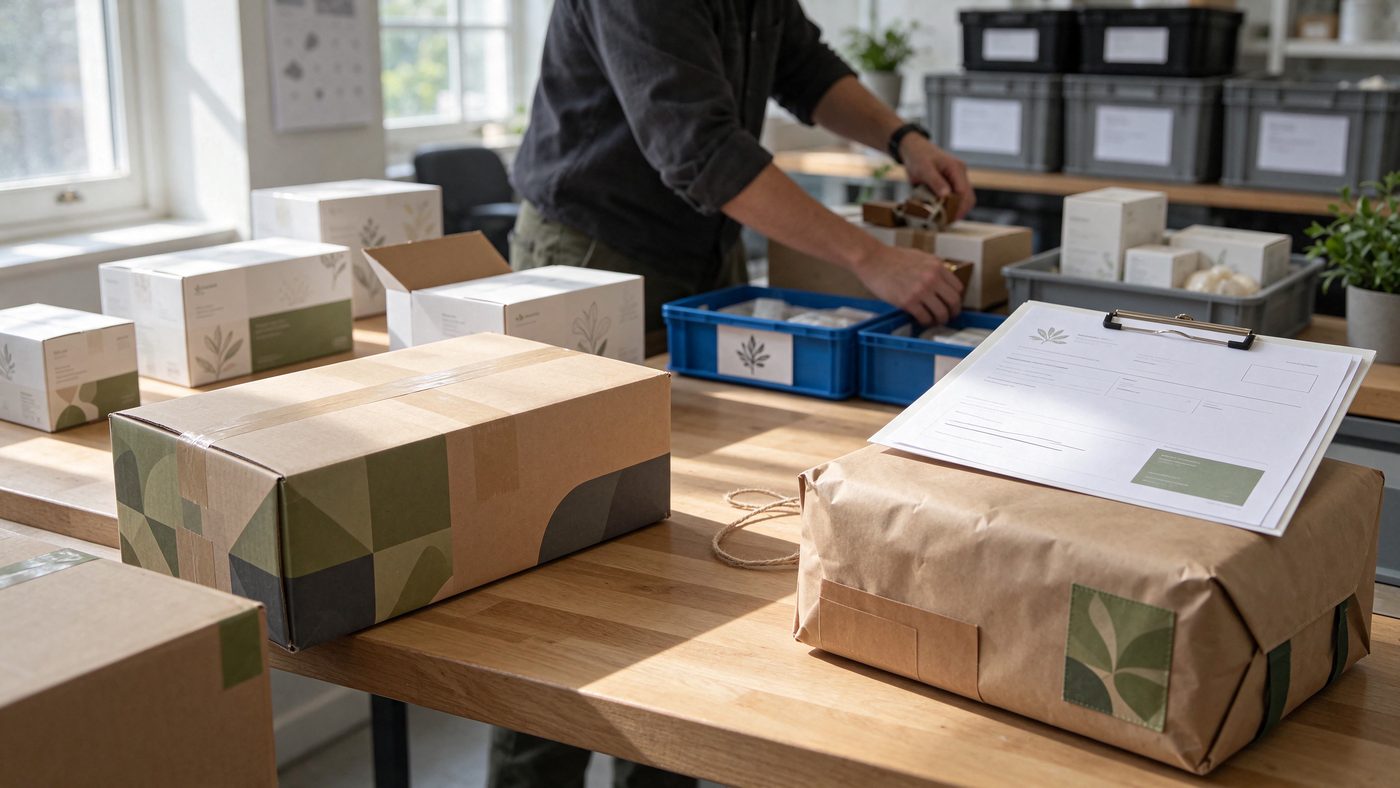
Map the order journey
Record how a customer order is received, checked, passed to the fulfilment route, packed, dispatched and followed up. Identify where the reseller or supplier is responsible at each stage.
Assign stock responsibility
Decide who holds stock, who confirms availability, what happens when a product is unavailable and how replenishment is reviewed. Do not describe a supplier as a warehouse or 3PL provider unless that capability is confirmed.
Keep packing and product identity aligned
The dispatched product, label, pack format and customer-facing description must correspond. Use the selected product record and approved label version as the reference for the workflow.
Plan exceptions and returns
Define the route for damaged parcels, incorrect items, customer questions, delivery issues and returns. The public process should be clear without promising a service step that has not been agreed.
Review the workflow before scaling
Use early customer questions, returns and stock events to improve the process. A controlled first range can reveal operational gaps before a business adds more channels or products.
| Decision area | What to check | Boundary |
|---|---|---|
| Workflow stage | Decision to document | Boundary |
| Order intake | Who receives and checks the order? | Confirm the actual route |
| Stock | Who holds stock and checks availability? | Do not assume warehousing |
| Dispatch | Who packs, labels and hands over the parcel? | Only advertise confirmed steps |
| Exceptions | Who handles returns and customer questions? | Publish a clear responsibility route |
Related Trade Guides and Sources
- Compare fulfilment models
- Plan returns and support
- Review no-stock dropshipping
- Review stock-route changes
Discuss Your Trade Route
Apply for an approved trade account to discuss selected products, evidence scope and suitable Trade questions.
Apply for a Trade Account