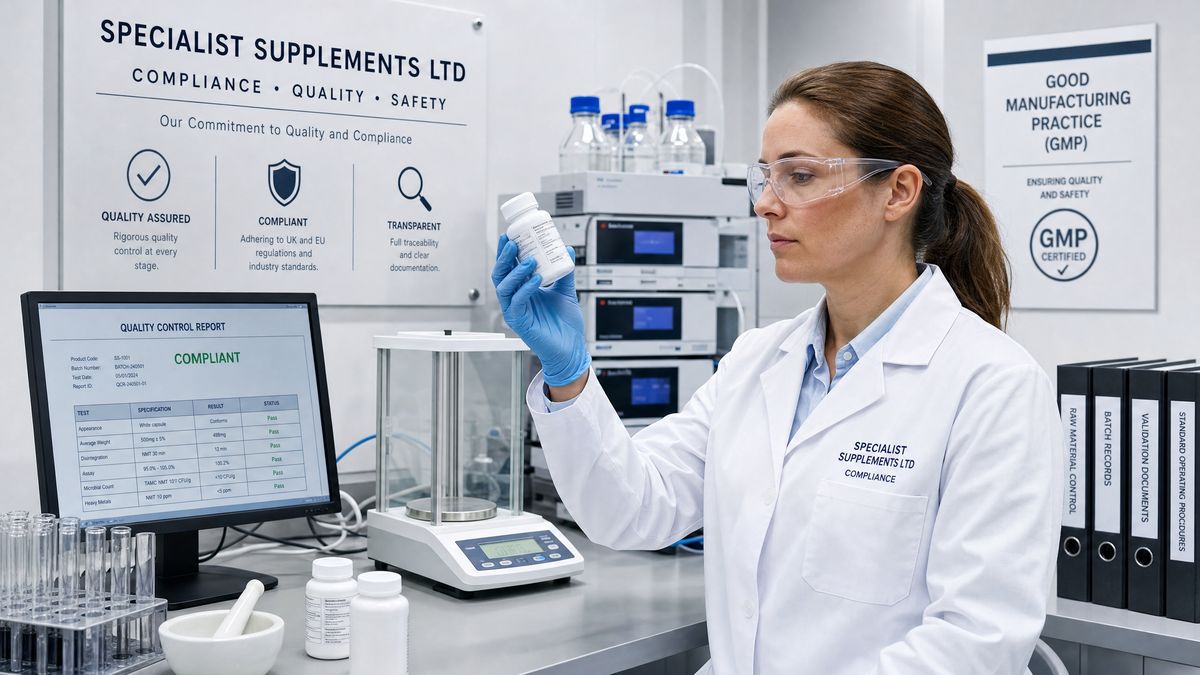
Is Supplement Dropshipping Legal and Compliant in the UK?

Navigating the Regulatory Landscape for Food Supplements

Regulatory Compliance for Supplement Dropshipping
GMP Certified ISO Compliant FSA Approved

Navigating the Regulatory Landscape for Food Supplements

The burgeoning market of food supplements, particularly through dropshipping models, presents both significant opportunities and complex regulatory challenges. For businesses operating within the United Kingdom, understanding and adhering to the stringent legal frameworks set forth by authorities such as the Food Standards Agency (FSA), Good Manufacturing Practice (GMP) guidelines, and relevant ISO standards is paramount. Specialist Supplements Ltd, trading since 1994 in the food and food supplements industry, emphasizes the critical importance of compliance to ensure product safety, efficacy, and consumer trust.

The UK Regulatory Framework: An Overview

In the UK, food supplements are regulated as food products and are subject to general food law. This means they are governed by legislation designed to ensure food safety and prevent misleading information. The primary regulatory body is the Food Standards Agency (FSA), which provides guidance and enforces regulations across England, Scotland, Wales, and Northern Ireland. While the overarching principles are consistent, specific regulations may vary slightly between the devolved nations, necessitating a thorough understanding of the applicable laws for each region [1].

Key legislation includes:

  • The Food Information Regulations 2014 (and devolved equivalents): These regulations govern the provision of food information to consumers, including labelling requirements for food supplements.
  • The Food Supplements (England) Regulations 2003 (and devolved equivalents): These specific regulations define food supplements and set out detailed requirements for their composition, labelling, and presentation [1].

It is crucial for dropshippers to recognize that food supplements are intended to supplement the normal diet and are not medicinal products. Therefore, they cannot claim to treat, prevent, or cure diseases, nor can they imply pharmacological, immunological, or metabolic actions [1].

Good Manufacturing Practice (GMP) for Food Supplements

Good Manufacturing Practice (GMP) is a system for ensuring that products are consistently produced and controlled according to quality standards. While GMP is often associated with pharmaceuticals, its principles are equally vital for food supplements to guarantee their safety, quality, and efficacy. Adherence to GMP guidelines is not just a recommendation but a critical component of regulatory compliance for any business involved in the manufacturing, distribution, or dropshipping of food supplements [2].

GMP covers various aspects of production, including:

  • Quality Management Systems: Establishing and maintaining a robust quality system to oversee all operations.
  • Personnel: Ensuring staff are adequately trained and qualified for their roles.
  • Premises and Equipment: Maintaining suitable facilities and equipment to prevent contamination and ensure consistent product quality.
  • Documentation: Comprehensive record-keeping for all processes, from raw material sourcing to finished product distribution.
  • Production and In-Process Controls: Implementing controls to prevent errors and ensure product specifications are met.
  • Complaints and Recalls: Having effective systems in place to handle customer complaints and manage product recalls efficiently [2].

For dropshippers, while they may not directly manufacture the products, they are still responsible for ensuring that their suppliers are GMP compliant. Partnering with GMP-certified manufacturers is a fundamental step in mitigating risks and ensuring the integrity of the supply chain.

The Role of ISO Standards

International Organization for Standardization (ISO) standards provide a framework for quality management and food safety that complements national regulations and GMP guidelines. While not always legally mandated for food supplements, ISO certifications demonstrate a commitment to international best practices and can significantly enhance a business's credibility and market access.

Two particularly relevant ISO standards for the food supplement industry are:

  • ISO 22000 (Food Safety Management Systems): This standard outlines the requirements for a food safety management system, covering all organizations in the food chain, from farm to fork. It integrates the principles of Hazard Analysis and Critical Control Points (HACCP) and is designed to ensure food safety at every stage [3].
  • ISO 9001 (Quality Management Systems): This is a generic standard for quality management that can be applied to any organization. Achieving ISO 9001 certification demonstrates a commitment to meeting customer and regulatory requirements and continually improving processes [4].

For dropshippers, working with suppliers who hold ISO 22000 and ISO 9001 certifications provides an additional layer of assurance regarding the quality and safety of the products they distribute.

Dropshipping Specifics: Responsibilities and Best Practices

Dropshipping, by its nature, involves a third party handling the storage and shipping of products. However, this does not absolve the dropshipper of their legal and ethical responsibilities. In the UK, if you are selling food supplements, you are considered a Food Business Operator (FBO) and must register with your local authority [1].

Key responsibilities for dropshippers include:

  • Supplier Due Diligence: Thoroughly vetting suppliers to ensure they comply with all UK regulations, including FSA, GMP, and relevant ISO standards. This includes verifying their registrations, certifications, and quality control processes.
  • Product Safety: Ensuring that all products sold are safe for consumption. This involves understanding the ingredients, dosages, and potential allergens.
  • Accurate Labelling: Confirming that product labels meet all UK legal requirements, including correct product name (e.g., "food supplement" not "dietary supplement"), ingredient lists, nutritional information, recommended daily dosage, warnings, and storage instructions. Labels must also include the business name and address of the FBO or importer [1].
  • Record Keeping: Maintaining detailed records of suppliers, products, and sales to facilitate traceability in case of a product recall or regulatory inquiry [1].
  • Marketing Claims: Ensuring all marketing and advertising claims are truthful, not misleading, and comply with advertising standards. Claims must not imply medicinal properties.

Trade Protection and Partnership with Specialist Supplements Ltd

Specialist Supplements Ltd operates with a strong commitment to trade protection, ensuring that our partners can thrive in a competitive market. We understand the importance of maintaining a clear distinction between trade and retail pricing. Therefore, prices for our high-quality, compliant food supplements are hidden for trade account holders, safeguarding your business interests and profit margins.

Our experience trading since 1994, coupled with rigorous adherence to UK regulations, GMP, and ISO standards, positions us as a trusted partner for dropshippers. We provide comprehensive support and ensure that all products meet the highest standards of quality and compliance, allowing you to focus on growing your business with confidence.

Call to Action

Ready to partner with a reliable and compliant supplier for your food supplement dropshipping business? Register for a trade account today to access our full product range and exclusive trade pricing. Join the Specialist Supplements Ltd family and benefit from our expertise and commitment to excellence.

Register for a Trade Account Here