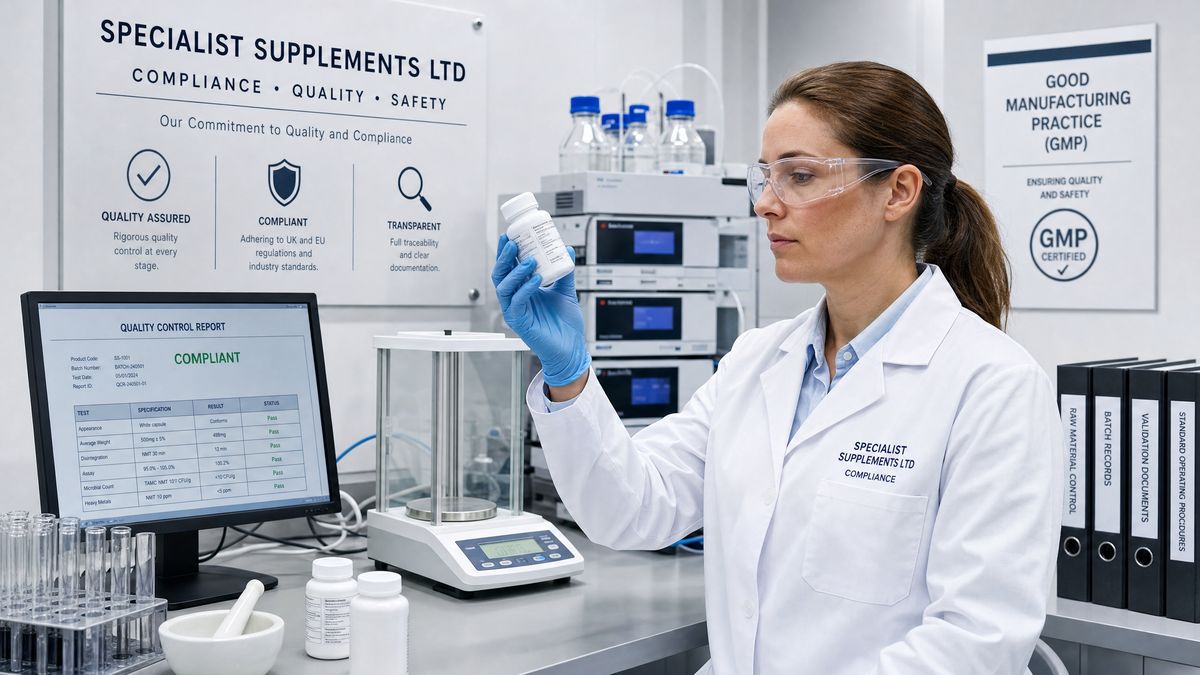
Importing food supplements into the United Kingdom is a complex process governed by a stringent regulatory framework designed to ensure product safety, quality, and consumer protection. For businesses operating in this sector, a thorough understanding of these regulations is not merely a legal obligation but a cornerstone of ethical practice and market success. With trading since 1994 in the food and food supplements industry, Specialist Supplements Ltd is committed to upholding the highest standards of compliance and quality. This guide provides an in-depth overview of the key customs and regulatory considerations for importing supplements into the UK, focusing on the critical roles of the Food Standards Agency (FSA), Good Manufacturing Practice (GMP), and ISO standards.
The UK Regulatory Landscape: Navigating the Food Standards Agency (FSA)
In the UK, food supplements are primarily regulated as food products, falling under the purview of the Food Standards Agency (FSA) [1]. The FSA is responsible for ensuring that food is safe and what it says it is. Businesses importing supplements must adhere to general food law, which encompasses various aspects from composition to marketing.
Key Regulatory Areas
The regulatory landscape for importing food supplements into the UK is multifaceted. Below is a breakdown of the primary areas of compliance:
General Food Law
Overarching principles dictating safety, traceability, and hygiene standards for all food products. Ensure full traceability of products and adherence to basic food safety principles.
Labelling Requirements
Strict rules governing the information presented on product packaging. Must include ingredient lists, nutritional information, allergen declarations, and specific warnings. Imported supplements often require re-labelling to meet UK-specific requirements [1]. Claims must not suggest preventing, treating, or curing human diseases, as this would classify the product as a medicine requiring MHRA approval [1].
Novel Foods
Regulations for foods or ingredients without a significant history of consumption in the UK or EU before May 1997. Requires pre-market authorisation under the assimilated Novel Foods Regulation 2015/2283 [1]. Importers must verify if any ingredients are classified as novel and ensure they have the necessary approvals.
Chemical Safety and Contaminants
Controls on levels of contaminants such as heavy metals, mycotoxins, and pesticides. Must comply with the Contaminants in Food (England) Regulations 2013 (and similar legislation in other UK nations) [1]. Importers are responsible for ensuring products meet these stringent safety thresholds.
Products of Animal Origin (POAO)
Additional, stricter import controls for supplements containing animal-derived ingredients (e.g., gelatine capsules, milk powders, fish oils). May require specific certification, and the third country and establishment of origin must be approved for export to GB [1]. Veterinary checks at the point of entry are common, and an Animal and Plant Health Agency (APHA) Import Licence may be necessary [1].
Ensuring Quality and Safety: Good Manufacturing Practice (GMP)
Good Manufacturing Practice (GMP) is a system for ensuring that products are consistently produced and controlled according to quality standards. It is designed to minimise the risks involved in any pharmaceutical or food supplement production that cannot be eliminated through testing the final product. For food supplements, adherence to GMP principles is crucial for guaranteeing product quality, safety, and efficacy.
Core Principles of GMP for Food Supplements
Quality Management System
A comprehensive quality management system is essential, covering all aspects of manufacturing, from raw material sourcing to finished product release.
Personnel
All personnel involved in manufacturing, processing, packing, or holding food supplements must be adequately trained, qualified, and supervised to ensure they perform their duties effectively and safely.
Premises and Equipment
Facilities must be designed, constructed, and maintained to prevent contamination and facilitate proper operations. Equipment must be suitable for its intended use, regularly calibrated, and meticulously cleaned.
Documentation
Comprehensive documentation of all processes, procedures, and records is a cornerstone of GMP. This includes detailed batch records, testing results, and robust complaint handling procedures.
Production and Process Controls
Strict controls must be in place throughout the production process to ensure product consistency and prevent errors. This includes rigorous controls over raw materials, in-process materials, and finished products.
Quality Control
A dedicated, independent quality control unit is responsible for sampling, testing, and approving or rejecting raw materials, packaging materials, in-process materials, and finished products.
While not always a strict legal requirement for food supplements in the exact same manner as for pharmaceuticals, GMP certification (such as against 21 CFR 111/117 or NSF/ANSI 455-2-2024) is highly regarded and often expected by major retailers and discerning consumers. It serves as a powerful demonstration of a brand\'s commitment to quality and safety.
International Standards for Food Safety: ISO 22000
ISO 22000 is an internationally recognised standard that specifies requirements for a food safety management system (FSMS). It provides a comprehensive framework for organisations throughout the food chain to ensure food safety. While GMP focuses primarily on the manufacturing processes themselves, ISO 22000 takes a broader, more holistic approach, integrating the principles of Hazard Analysis and Critical Control Points (HACCP) and applying them across the entire food supply chain.
Benefits of ISO 22000 Certification
Enhanced Food Safety
It provides a systematic, proactive approach to identifying, evaluating, and controlling food safety hazards, significantly reducing the risk of contamination or product recalls.
Global Recognition
As an internationally recognised standard, it facilitates global trade by providing a common language and framework for food safety management, making it easier to work with international suppliers and partners.
Improved Efficiency
Implementing an FSMS helps streamline processes, reduce waste, and improve overall operational efficiency through a structured, continuous improvement approach.
Increased Consumer Confidence
Certification demonstrates a clear, verifiable commitment to producing and supplying safe food products, thereby enhancing brand reputation and building trust with consumers.
For businesses importing supplements, ensuring that their suppliers hold ISO 22000 certification offers an invaluable additional layer of assurance regarding the safety and quality of the products they are bringing into the UK market.
Compliance Challenges and Best Practices for Importers
Navigating the intricacies of UK import regulations for food supplements can present several significant challenges. Common pitfalls include misinterpreting complex labelling requirements, inadvertently importing novel foods without the necessary authorisation, or failing to ensure that products meet strict contaminant limits. To mitigate these risks and ensure smooth operations, importers should adopt the following best practices:
Conduct Thorough Due Diligence
Rigorously verify that all suppliers adhere to relevant UK and international standards, including GMP and ISO certifications. Request and review documentation to substantiate their compliance.
Stay Updated
The regulatory landscape is dynamic and subject to change. Importers must regularly monitor updates from the FSA, MHRA, and other relevant regulatory bodies to ensure ongoing compliance.
Seek Expert Advice
Given the complexity of the regulations, it is highly advisable to consult with regulatory experts or industry trade associations to ensure full compliance, particularly when dealing with complex products or novel ingredients.
Maintain Meticulous Records
Comprehensive documentation of sourcing, manufacturing, testing, and import procedures is vital. This not only demonstrates compliance to regulatory authorities but also facilitates rapid traceability in the event of a product issue.
Partner with Specialist Supplements Ltd: Your Trusted Expert
With trading since 1994, Specialist Supplements Ltd stands as a beacon of expertise and reliability in the food and food supplements industry. Our deep understanding of UK and international regulations, coupled with our unwavering commitment to quality, ensures that all products meet the highest standards of safety and compliance. We pride ourselves on offering premium-quality supplements that are fully compliant with FSA, GMP, and ISO guidelines.
Please note: Prices for our trade and wholesale products are hidden to protect our valued trade partners. To access our full product range and competitive pricing, we invite you to register for a trade account.
Register for a Trade AccountConclusion
The successful importation of food supplements into the UK hinges on a comprehensive understanding and strict adherence to the established regulatory framework. By prioritising compliance with FSA guidelines, embracing the rigorous principles of GMP, and leveraging international standards like ISO 22000, businesses can confidently ensure the safety, quality, and legality of their products. Partnering with experienced, knowledgeable industry leaders like Specialist Supplements Ltd further streamlines this complex process, providing invaluable peace of mind and a clear pathway to sustained success in the highly competitive UK market.
References
[1] Food Standards Agency. "Importing food supplements and health foods." https://www.food.gov.uk/business-guidance/importing-food-supplements-and-health-foods